Digital reality has brought a new dimension to our existence: digital permanence after death. In a world interconnected by social networks, e-mail and a myriad of online accounts, a crucial question arises about how to…


The sixteen fundamental rights in the digital age set out in the Technohumanist Manifesto (2020, 2025 edition). Each right has its article on IANética: click to read it. The full Manifesto, with its seven principles and its decalogue of commitments, is at tecnohumanismo.com.
Digital reality has brought a new dimension to our existence: digital permanence after death. In a world interconnected by social networks, e-mail and a myriad of online accounts, a crucial question arises about how to…

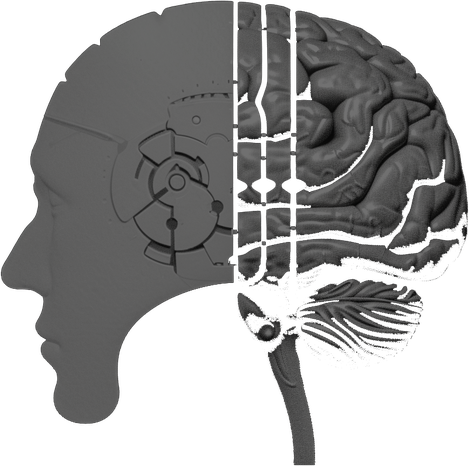
In a world where neurotechnology and cyborgization are emerging as imminent realities, it is crucial to address the right to the integrity of the human being. This new technological era promises unprecedented advances in medicine,…

Throughout history, human beings have tirelessly explored the frontiers of knowledge and technology in search of answers and solutions to the enigmas that surround them. One of the most fascinating and controversial concepts to have…

Digital identity is made up of the user’s data present in the Digital Ecosystem and on the Internet, as well as their actions, opinions, photos, videos, browsing, interactions and digital footprint, but also of what…

The right to digital legacy refers to the idea that people have the right to determine what will happen to their digital content after their death. This includes social media accounts, emails, photographs and any…

The right to digital inclusion is a human right arising from the new technological environment that the Internet has created. It can be derived from other concepts such as the right of access to information…

The right to the truth means having a full and complete knowledge of the events that took place, the people who took part in them and the circumstances in which they occurred, in particular manifest violations of Human Rights and serious breaches of…

Faced with the unstoppable advance of digital technology and the new Metaverse, specifically the arrival of 3.0 tools based on Blockchain and Artificial Intelligence, we ask ourselves whether our concepts of digital property and intellectual…

The right to education is a fundamental right enshrined in the Charter of Human Rights and in the Spanish Constitution. This right extends to the digital sphere as well. Education, like any other sector of activity, is also immersed…

Nobody is obliged to share data. But if they decide to, and the data is sensitive, they should be able to exchange it reliably and with guarantees of its protection. The European Union is…
Created and driven by Pedro Mujica: founder of the technohumanist movement, CEO of WECOLAB NETWORK, cognitive architect and creator of Rebelia, the first technohumanist artificial intelligence in the Canary Islands, for the Las Palmas de Gran Canaria bid to become European Capital of Culture.


The technohumanist movement defends technology at the service of people: artificial intelligence, the metaverse and every other technology should expand our capabilities without taking away our autonomy, dignity or rights. It was born with IANética in 2020 and is built around the Technohumanist Manifesto and its fundamental rights.
Today the movement lives at tecnohumanismo.com: there you can read the Technohumanist Manifesto, join the movement and follow its activity. This website no longer collects sign-ups or messages through forms and continues as an archive of articles.
This project is kept alive thanks to the support and collaboration of Las Palmas de Gran Canaria.



Geography Rebellion
rebeliondelageografia.com