CONTEXT
This text was published in 2020 to explain the difference between two ways of looking at the future of technology: one that seeks to transform the human condition (transhumanism) and one that puts technology at the service of people (technohumanism).
The debate remains open and continues to be fed from tecnohumanismo.com, home of the technohumanist movement and its Manifesto.
TransHumanism and PostHumanism
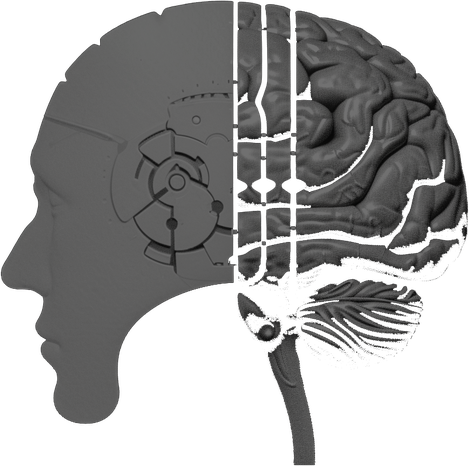
Transhumanism (abbreviated as H+ or h+) is an international cultural and intellectual movement whose ultimate aim is to transform the human condition through the development and manufacture of widely available technologies that enhance human capabilities, whether physical, psychological or intellectual.
Transhumanist thinkers study the possible benefits and dangers of new technologies that could overcome fundamental human limitations, as well as the appropriate technoethics when developing and using those technologies.
They speculate that human beings may become capable of transforming themselves into beings with extensive capabilities, deserving of the label “posthuman”. In this transhumanist sense, posthumanism is usually understood as the destiny of the human being once intellectual and physical limitations are overcome through technological control of its own biological evolution, giving rise to a physicalist existential state in which the natural transcendence of humanity is already mastered.
On the other hand, the term posthumanism is also used in postmodernism as a way of designating the currents of thought that aspire to a overcoming of humanism in the sense of the ideas and images that come from the classical Renaissance. The aim is thus to update those conceptions for the 21st century, often implying an acceptance of the limitations of human intelligence.

AntiHumanism and MetaHumanism
Antihumanism is a term applied to a number of thinkers who are opposed to the project of an anthropological or anthropocentric philosophy. What is central to antihumanism is that notions that speak of human nature or of “man” or “humanity” in the abstract must be rejected as historical or metaphysical relativity, together with the rejection of the human point of view as autonomous subjects.
Metahumanism is a critique of fundamental premises of classical humanism such as free will, autonomy and the superiority of the anthropos on the basis of its rationality.
It delves into the view of the body as a field of relational forces in motion and of reality as relational becoming, embodied and immanent, which is not necessarily oriented towards the production of defined forms and identities, but can proliferate in a permanent amorphogenesis.
Monsters are promising strategies for developing this move away from humanism, possibly through Cyborgization

Technohumanism vs Transhumanism
The aim of Transhumanism is to transform the human condition through the development and manufacture of technologies that enhance human capabilities, at the physical, psychological and intellectual level.
Technohumanism, in relation to Transhumanism, does not seek the evolution towards the Augmented Human, nor does it aim to halt a possible Cyborgization; it simply defines itself as a movement that conceives human values in an integrated way, in the context of a Second Renaissance, where the anthropocentric vision puts Technology at the service of the Human Being.
This vision is to be achieved through the development of a normative ethics in the field of Technology, in order to hybridise it with the new Humanism of the Digital Age.
This union of thought and technology, arising from the application of the ideas and theses of the human disciplines to the disruptive emerging technologies of the Fourth Industrial Revolution, is the main foundation of the movement and the means by which it achieves its ultimate aim: Technological Anthropocentrism.